A fairly new genre of Young Adult (YA) fiction is the “verse-novel,” a story told in free verse poetry. This form of writing has been gaining momentum since the early 1990s when novels in verse were starting to make an impression on the YA literature landscape.
Verse-novels are an evolving art form. As explained by Joy Alexander in her article “The Verse Novel: A New Genre” (Children’s Literature in Education, September, 2005), there is the question about what a verse-novel truly is. In some cases, a series of poems linked in a narrative sequence is seen as a verse-novel, while in other cases, an entire story being told in free verse is a verse-novel. It is this latter definition that seems to be taking over, and I believe rightly so.
Alexander makes the comment that this genre has “limited appeal for young readers.” I’m curious what she means by “young” as well as “limited.” As a high school teacher, I find that once young adults discover this genre, they tend to love it. There are several reasons I think this is so:
1. These novels are extremely quick reads. Even Ellen Hopkins’s verse-novels, which can be upwards of 700 pages, can be read in no time due to the verse-novel format where there are few lines on most pages. I find kids feel proud of the fact that they can read such a “fat” book after being so used to heading to the library to look for the skinniest book on the shelf.
2. The topics of the books tend toward the serious side. Students enjoy the fact that they either see themselves or others in the characters in the verse-novels they have read. Most verse-novels are told in first person, so the character telling the story and those around him or her are often very nicely developed.
3. These books are unique, and this appeals to my adolescent readers. They are reading a story and poetry all at once. That’s a heady feeling to be so literary for some of my kids!
Some verse-novels find themselves on the challenged list. One of the most challenged may be the books of Ellen Hopkins, whom I mentioned earlier. Her stories are edgy and include language and situations that are graphic and explicit. Hopkins was even uninvited from the Humble ISD’s literary festival that was scheduled for January, 2011, when several parents complained about the content of her books. That is unfortunate because many students find their lives mirrored in the pages of her book. Last spring, one of my high school boys who had just finished reading one of her books said something like, “This [drug-addicted character] is like my mom. I kind of get her better now.” It didn’t make his life any easier, but it was helping him process why she was the way she was. I wouldn’t trade that experience for him for anything.
Some verse-novels to try:
Crank by Ellen Hopkins (2004)
This is the story of 17-year-old “good girl” Kristina Snow who is introduced to crystal meth, or “crank,” when she visits her biological father. Under the influence of this highly addictive drug, Kristina becomes the uninhibited Bree, and as her life spirals out of control, her future becomes more and more uncertain. This is the novel in verse that my high school student was referring to when he said he understood his mother better. A sad portrayal of a life taken by the monster that has claimed so many lives.
All the Broken Pieces by Ann Burg (2009)
Twelve-year-old Matt is adopted. His Vietnamese mother gave him up when he was 10 to be airlifted out of war-ravaged Vietnam, and his new parents are American. He has many worries and concerns as he thinks about his biological mother and brother while facing prejudice and discrimination from those around him who are still hurting from the after shocks of the Vietnam War. Eventually, a new baseball coach, Matt’s adoring adoptive parents, and a group of Vietnam Vets help him find his way through the pain and into discovering who he really is.
Because I am Furniture by Thalia Chaltas (2009)
Anke’s father abuses everyone in the family but her – her mother, her sister, and her brother. Because she is left alone, she feels relieved, but oddly enough, also worthless. When she makes the volleyball team at school, she starts finding her voice and her confidence. And this leads her to try to figure out how she can speak about what is happening in her family and get it to stop. I think the poetry in this novel in verse is particularly well done.
Monday, October 8, 2012
Monday, October 1, 2012
GLBTQ Literature and the Stonewall Award
The Stonewall Award, one of the newest awards in Young Adult literature, was awarded for the first time in 2010. Although only two years old, the Stonewall Award has a history going back much further. Originally known as “The Gay Book Award” when Patience and Sarah by Alma Routsong became the first recipient in 1971, the honor has had many names until most recently when it became known as the Stonewall Book Award. Books eligible for this award have characters and plots that are Gay, Lesbian, Bisexual, Transgender, and/or Questioning (GLBTQ) with characters and situations falling into one or more of these categories.
Novels with gay characters are becoming more abundant each year. GLBTQ novels fall into two general categories:
1. novels that rely on homophobia as the foil in order to make the novels realistic
2. novels that suspend reality and create a utopian world where being gay is accepted as a natural part of the society in which the novel is set
Many see the rising instances of gay characters in novels, as well as novels about the gay experience as giving voice to the gay adolescent. Thomas Crisp, assistant professor at the University of South Florida, argues, however, that there does not exist a Young Adult gay novel that does not reinforce the norms of heterosexual society, thus somewhat defeating the purpose of the novels’ supposed intent to serve as both a window and a mirror for readers. Crisp also states that publishers are, obviously, trying to reach the widest audience possible. Thus, they are likely to publish books that look progressive while maintaining relationships and power structures that are taken for granted because they fit into the heterosexual structure of what is "normal."
(For further discussion of this topic, see Thomas Crisp’s article “From Romance to Magical Realism: Limits and Possibilities in Gay Adolescent Fiction” in Children’s Literature in Education, 2009, Vol. 440, pp. 333-348).
How do kids feel about books with a gay plot and characters? Interestingly, of all the books that I discuss with my students, this topic has only come up once or twice that I can remember, and then it was only mentioned in passing. So I don’t know how students feel about gay story lines and characters who are not heterosexual trying to find their way in a homophobic society. Perhaps that is evidence in and of itself that kids who are gay are continuing to “lay low” because of the ostracism they and others continue to receive for being “different.” Do the current titles that qualify for The Stonewall Book Award” satisfy their need to feel like they are not alone? I don’t know. Do those kids even know these novels exist? Again, I’m not sure if they know, and if so, to what extent.
Some novels that fall into the GLBTQ category in different ways:
Boy Meets Boy by David Levithan (2003).
Paul is an openly gay high school sophomore who lives in a gay-friendly community. One of those novels that suspends reality, this novel follows a pretty formulaic plot line where romance is at first thwarted, best friends are offended and estranged for a time, and everything works out “happily ever after” in the end. Winner of the Lambda Literary Award, this novel is for those who don’t want to read a novel that deals with the typical topic of homophobia.
The Eagle Kite by Paula Fox (1995)
Liam’s finds out his father is dying of AIDS, but when his mother tells Liam that his father contracted AIDS from a blood transfusion he’d had a while back, Liam knew she was lying. Liam has a memory of the day he saw his father embracing a young man at the beach – the day Liam broke his eagle kite. The family falls apart amidst the secrets everyone is keeping, yet everyone seems to know, and eventually Liam’s father moved to a cottage two hours away. When Liam finally goes to visit him, they are able to begin piecing their relationship back together.
The House You Pass on the Way by Jacqueline Woodson (1997)
A typical coming-of-age novel, this story covers several issues. Evangeline “Staggerlee” Canan is thirteen-years-old, and she is the daughter of a black father and a white mother. Set mostly in an African-American community in South Carolina, she finds herself on the outside not just because she is biracial, but also because she thinks she’s gay. Through interacting with her thirteen-year-old adopted cousin Trout, she begins to feel her way through what it means to love in a place that is intolerant.
Monday, September 24, 2012
Alternating Narrators and Other Interesting Formats
Many literacy experts are studying the multi-modal literacies of young adults these days. In other words, adolescents read a much wider variety of texts than we did when I was an adolescent. Today’s young adults read not only traditional texts such as books and magazines, but they read websites, Face Book, text messages, e-mail, and instant messages. Young Adult literature has changed in form and structure to mirror these new literacies. Novels with interesting and unusual formats are being published more frequently than ever before. They are a serious departure from the chronological story told in first or third person from one character’s or a narrator’s point of view. And these formats are both intriguing to and appreciated by adolescents.
One of these new structures is the novel told from multiple perspectives. Some flip-flop back and forth between two different characters, each one with a different voice or style of story-telling. Some may tell the story from several characters. Each novel offers the reader the opportunity to observe the same events from different points of view, which from my vantage point as a high school English teacher, is a good thing for ego-centric teenagers who seem to think their perspective is the only perspective.
Another interesting format is the novel that is told through multiple types of documents. The pages look like reprinted interviews, newspaper articles, police reports, notes passed between friends, doctors’ charts, and the list goes on. Other formats include graphic novels (they look like extra-thick comic books) and novels in verse (stories told through narrative poems), but we’ll get to these a little later.
Young adult readers like these varying formats. Perhaps adolescents like them because they mimic the quick reading they do as they bounce around from website to social media to phone messages, making the reading go faster and feel more interesting. Adults are not nearly as receptive to these creative formats – we are, after all, digital immigrants as opposed to our digital native children. Books were meant to proceed in a linear fashion. But the kids love them – the novelty and creativeness hook many of the most reluctant of readers. That in itself makes them good enough for me.
Some books in alternate format to consider:
Beauty Queens by Libba Bray (2011)
Fifty teen-age beauty contestants on their way to the Miss Teen Dream pageant are left stranded on a supposedly deserted island after their plane crashes. Eleven contestants survive – and they are not all what they seem. Forced to survive in the jungle without enough eye liner, the girls are plunged into the heart of utter darkness – a world without exfoliators or lotions. Will they be rescued in time?
Hilariously funny, Libba Bray profiles seven of the contestants through inclusion of “Miss Teen Dream Fun Facts Page!” and then the third-person narrator tells part of the story from each of those contestants point of view. Also included are "Commercial Breaks" and "Words from our Sponsor" which give laugh-out-loud information about "The Corporation" - the company that sponsors the Miss Teen Dream Pageant.
Bruiser by Neal Shusterman (2011)
Brewster “Bruiser” Rawlins is a big kid who keeps to himself, and he’s been voted “Most Likely To Receive the Death Penalty” by his peers. However, when Brewster starts dating Bronte, odd things begin to happen. Bronte’s cuts and sprains miraculously heal. She begins to realize that she feels peaceful and content, even when she shouldn’t. She eventually realizes that something strange is happening when she is near Bruiser, and it turns into more horrifying than she ever expected.
Told from four points of view – Brewster, Bronte, Bronte’s twin brother Tennysin, and Brewster’s young brother Cody, Bruiser is a story that will leave the reader thinking about all four characters long after the last page is turned.
Shooter by Walter Dean Myers (2004) Myers tells the story of three misfit teenagers after the shooting of Brad, a jock, has occurred at the school. Delving into the idea of bullying and where it can progress in its extremes, Shooter takes the reader into a situation that has become all-too-common since the 1966 shooting at the University of Texas, and including shootings at Columbine High School and Westside Middle School in Jonesboro, Arkansas.
The reader gets to know Leonard, the shooter, through in depth interviews with Cameron - Len's best friend, and Carla - Len's former girlfriend, as well as through newspaper clippings, and the "die-ary" of Len himself. The school psychologist, an FBI agent, a threat analysis specialist, and the town sheriff all participate in the follow-up investigation, lending interesting voices and perspectives to Carla's, Cameron's and Len's.
And finally, not necessarily one I would recommend, but a book that falls into the alternate format category:
ttyl by Lauren Myracle (2004)
Part of the "Internet Girl" series, this novel is told entirely in instant messages between and among three high school girls - Angela, Zoe, and Maddie. As the girls love, fight, and laugh through experiences during their sophomore year, we learn about their adventures through their instant messages to each other. An interesting format and one that attracts my YA female readers. However, the young women whom I have known to read them read them strictly for the interesting format and the fun of trying to figure out some of the shorthand phrases. They have almost all made the comment that "high school girls aren't really like that."
Novels in the series include ttyl (talk to you later), ttfn (ta-ta for now), and l8r, g8r (later, gator).
Monday, September 17, 2012
"Problem Novels" - a problem?
Young adult (YA) realistic fiction is often referred to as the “problem novel.” Brian Sturm and Karin Michel have a nice description of the problem novel in their 2009 article “The Structure of Power in Young Adult Problem Novels.” The description reads as follows: “Contemporary realistic fiction is derived from actual circumstances, with realistic settings and characters who face problems and opportunities that are within the range of what is possible in real life.” Teenage readers like them because they can either relate to the characters and their situations, or they can use the characters and situations to explore territory where they have not gone themselves. However, the novels are complex and “gritty” which often draws the attention of those who would say they are inappropriate for adolescent readers.
Unfortunately, the challenges to this literature for adolescent readers usually come from those who have not actually read any of the novels they wish to challenge. They base their objections on cursory glances at pages, see language they consider inappropriate, and sound the alarm without actually reading the novel. My logic finds that a bit illogical! Is it wrong to voice concern or objection about a novel? No, but at least have actually read it first.
Some of my conservative friends – who also consider me a conservative because I actually am – might be surprised to hear me say that I would disagree with these would-be censors. I have read hundreds of YA novels, most of which fall into the “problem novel” genre. I have not found the language or situations to be gratuitous. What I have read is real – and after working for 24 years with at-risk kids, I know what real is for them. They want to know they are not alone in their situations, and they want to explore situations in which they have not had experience, and that is not a bad thing.
A young man in my high school English class last spring showed me a book by Ellen Hopkins and said something like, “I like these books. My mother is like this. I kind of understand her better now.” His mother is a drug addict who has been in and out of institutions and jail his whole life. If this book by a frequently challenged author helps him to understand her better, he has a better chance of stepping out of her footsteps and making better choices to help him avoid her fate.
If you would like to read opposing viewpoints on the “problem novel,” I recommend these two. (I side with Crutcher, by the way, in case I didn’t make my point clear. And may I highly recommend his novels. He is one of my top 5 favorite YA authors).
Gurdon, Meghan Fox. “Darkness Too Visible.” The Wall Street Journal, June 4, 2011
http://online.wsj.com/article/SB10001424052702303657404576357622592697038.html
Crutcher, Chris. “Young Adult Fiction. Let Teens Choose.” The Huffington Post, July 21, 2011
http://www.huffingtonpost.com/chris-crutcher/young-adult-fiction_b_906398.html
Here are three titles in the “problem novel” genre that I recommend, beginning with one of my favorites from Chris Crutcher:
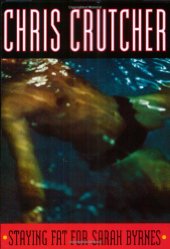
Crutcher, Chris. Staying Fat for Sarah Byrnes. (2003).
Fat Eric and severely scarred Sarah have been friends for years, their respective problems providing them with a way to bond when they are rejected by their peers. But Eric finds that he likes swimming, and when he joins the swim team, his pounds begin to melt off. His feelings for Sarah do not change, but their ability to relate to each other in the same, comfortable way does. When Sarah suddenly stops talking and ends up committed in a mental ward, Eric is compelled to help his friend. What he finds out about her scars and her life may threaten their friendship forever when he shares what he knows with people he believes can help him to help her.
Anderson, Laurie Halse. Wintergirls. (2010).
Lia is 18 and has vowed to be the skinniest girl in school. Lia has anorexia, and after the death of her best friend Cassie, she is starving herself into nothing. Anderson’s creative use of formatting and the weaving of the mythical Persephone into the story create a powerful look into the mental illness with the highest mortality rate. As she did with the subject of rape in her novel Speak, Anderson once again takes an open and frank look at a very difficult subject and does it in a way that should provide young men and women with eating disorders with an open door for important discussions. Anderson's website provides trailers and other interesting information about this novel.
http://madwomanintheforest.com/youngadult-wintergirls
Lyga, Barry. Boy Toy. (2007)
Josh is a senior, a math whiz, and star baseball player. However, when Josh was in the 7th grade, he has sex with his teacher. Josh’s story is told in a series of flashbacks, and it’s a story that is hard to read. He’s confused, and as with many young victims, does not really understand what happened. It is not until he confronts the teacher after she is released from prison, in a shocking encounter for both Josh and the reader, that he understands this was not his fault and begins to find a place from which to begin healing.
Monday, September 10, 2012
Young Adult Book Awards
Young Adult (YA) fiction published during the year has the opportunity to win several awards offered annually. My favorite award is the Michael L. Printz Award for Excellence in Young Adult Literature. Given by the Young Adult Library Services Association (YALSA), a division of the American Library Association (ALA), the Printz award was first presented in January 2000. The award is given to the best YA book of the year. So who gets to decide “best”? It’s a lengthy and complicated process, but the winners are chosen by librarians and teachers/professors strictly in terms of literary merit, not popularity with teens. In other words, adults choose the winners based on the significance of its cultural value – its artistry, depth, ability to stand the test of time. There are as many ways to define “literary merit” as there are librarians and English teachers, and that is a complicated discussion for another forum. Let’s get back to the Printz Award.
I like the award because of the books that have been chosen to represent it. I personally find that I like the books that are chosen and the four or fewer honor books that are the runners up each year. They are definitely well written in an artistic sense and most would classify them as good literature. However, the Printz award comes under fire for being inaccessible to the Young Adults for whom they were supposedly written. Even though popularity is not a consideration, I find that my students like them for the most part, too. The characters are well-rounded, the plot lines are engaging and complex, the themes are universal. As with any book, Printz award winners and honor books must be matched to the student. Not all students will appreciate the complexities of some of the books which have received the award, but isn’t that true for all books? Not everyone will find them to be their cup of tea. For more information on the Printz Award, visit the YALSA website:
http://www.ala.org/yalsa/printz
These are Printz award winners and honor books that appeal to a large portion of the high school population that I teach. They are always at the top of my recommendation list to both boys and girls.
Monster by Walter Dean Myers, 2000 Printz winner (the first book honored with the Printz award; also a National Book Award winner, and the Coretta Scott King Award honor book)
Steve Harmon is arrested and put on trial for murder. During his trial, Steve, an aspiring screen writer, records the details of the trial as a screenplay. Interspersed between the scenes, Steve’s handwritten journal details the horrors of being in jail. This book is great because it appeals to boys, and students who read this novel often say they feel like they were there with Steve. When they reach the end, young adult readers almost always need and want to talk about it. Some ambiguity in the ending leaves them needing interaction on the book. And isn’t that a great thing? Students who read this in a “book club” environment love the discussion.
Speak by Laurie Halse Anderson, 2000 Printz honor book
Melinda is at a party right before her 9th grade year starts. Unfortunately, a serious incident at the party has her calling 911 which results in a swarm of police. When students discover that it is Melinda who called the cops, she is ostracized while having to also deal with the emotional ramifications of the incident. In the midst of this turmoil, Melinda simply decides to quit speaking – to anyone. The only one who seems to have a way to help her is her art teacher, who helps her find her voice by channeling her emotions through drawing. The climax of the story comes at the end of the year when the truth of what happened at the party is finally revealed. My girls love this book, but boys who have been willing to give it a try enjoy it too. Check out Ms. Anderson’s website for a poem she wrote using lines sent to her by male and female readers of Speak who had had similar experiences to Melinda’s. She reads the poem in the video at the right side of the page, and a print copy is in the Teacher’s Section under the video. Powerful stuff. Very powerful.
http://madwomanintheforest.com/youngadult-speak
The Book Thief by Markus Zusak, 2007 Printz honor book
My school district uses The Diary of Anne Frank in 8th grade English as required reading. Most of my students say they enjoyed it and the study of World War II and the Holocaust. For that reason, The Book Thief is a good choice for many of them. Narrated by Death, it is the story of Liesel Meminger who lives during the rise of Hitler. Generally an obedient girl, Liesel can’t seem to stop herself from stealing when her favorite object is involved – books. With the anxiety growing over the rise of the Nazis, observations made by both Liesel and Death bring a fresh perspective not only on the historical period, but also emphasize the power of the written word.
Monday, September 3, 2012
Teaching the Classics
There is a controversy which has been brewing among English teachers for a while about what literature to teach in high schools. Others involved in the discussion include other district officials, parents, community members, and university faculty. The question is - should teachers use current young adult (YA) fiction in their classrooms, or should they teach the classics?
Some definitions may be in order. "Classics" usually refers to works written anywhere from 50 to 2000 years ago and includes names such as Shakespeare, Hawthorne, Austen, the Brontes, Hemingway, Steinbeck, Fitzgerald, Faulkner, Poe, and the list could go on. YA literature for the most part, is mostly less than 30 years old, with many popular titles sporting publishing dates in the last 10 years. Classics were mostly written for adults and have adult themes, characters, and situations. YA fiction, on the other hand, is written for teens, with teen characters and situations.
As a high school English teacher for nearly 25 years now, I have to say that I'm solidly on the side of the fence with those who purport that use of YA fiction should far outweigh use of the classics. So many teens are alliterate - they can read but they choose not to - and I believe an issue is that they are not able to find a foothold in stories where the vocabulary looks like a foreign language, the situations are in no recognizeable way similar to their situations, and they cannot relate to the characters. These hindrances are even more serious for those readers whose skills are below average.
Are there lessons to be learned from the classics? Of course. Should they be abandoned altogether? Certainly not. But the way classics are taught in high school English classes can go far toward either turning students off or helping them become engaged. And since so many students will not (and probably cannot) read classics on their own, they need to know that there are many good books out there that will draw them in and keep them interested. Books where they can see themselves in the characters. Books where their situations are mirrored in the plots. Books that can transport them to new worlds.
I tend to teach classics by using excerpts and tying the themes from those classics into current YA literature that my students can then take and read independently. They seem to love this arrangement. They get some background in our literary heritage while learning they can actually enjoy reading for pleasure. The conversations are rich and deep. So don't come into my classroom expecting to be beaten repeatedly over the head with a volume of Romeo and Juliet that is being analyzed to death. Instead, expect to see us read some scenes from R & J paired with recommendations of YA "classics" that explore family relationships such as Jacob Have I Loved or Hope Was Here that students may then select for themselves.
On a personal note - I knew I was going to be an English teacher before I reached high school. I was a good student who tried hard and loved to read. But I left high school with a list of classics I had "read" but didn't understand or enjoy (or remember anything about 10 years later). I went back to read many of them as an adult and from that perspective often had to wonder "What was my teacher thinking having us read this in 10th grade?" I believe YA fiction, much of which is powerful, covers important issues, and is beautifully written, holds the key for helping secondary students find the joy of reading again as well as improve their reading skills.
If you are interested in reading more about this debate between the classics and YA fiction in school, this commentary might get you started:
www.squeetus.com/stage/shannon_ramblings.html
Speaking of YA classics, novels that have stood the test of time for 30 years or even longer, here are three of my favorites:
Killing Mr. Griffin by Lois Duncan (1976)
What happens when students decide to get revenge on their English teacher and it goes wrong - terribly wrong? Mr. Griffin is an extremely tough teacher. He cares about his students and wants to bring out their best by making them work hard. But some of his students don't like they way he tries to help them realize their potential. Several students decide to pull a prank to teach their hard-nosed teacher a lesson, but unfortunately, it doesn't go as planned. Now the students are in a situation they never expected and from which they can't escape.
Roll of Thunder, Hear My Cry by Mildred Taylor (1976)
This novel was one of my first experiences with YA literature, and Mildred Taylor became one of my favorite authors when I read it. The Logan family lives in Mississippi, and they're black. Told from the point of view of nine-year-old Cassie Logan (her character voices this story in a way that is way beyond her nine years), the family's struggles with the Wallaces, a white family who owns much of the business in their community, introduces readers to the pre-Civil Rights deep south in a way that is vivid and powerful.
Homecoming by Cynthia Voigt (1981)
Dicey Tillerman is 13-years-old when her mother abandons her and her three younger siblings at a Connecticut shopping mall. With no choice but to try to get to their family, whom they've never met, the little family sets out on foot to find first the aunt that their mother had mentioned, and later their grandmother. The children face many dangers as they try to reach their destination. The trip they make keeps readers on the edge of their seats with anticipation and suspense as Dicey does her best to shepherd the group to safety. It is almost impossible not to put yourself in Dicey's place and wonder what you would do if you suddenly found yourself alone at 13 and in charge of three little ones who had no one to depend on but you.
Saturday, September 1, 2012
A New Semester
This semester we're going to focus on Young Adult Literature once again. Continuing with a thematic approach, we're going to look at trends and issues in YA literature that include topics such as censorship, how YA literature has changed over the decades and where it may be heading, what's "hot" and what's not, and newsworthy events. Along the way, we'll look at some great YA literature - from
classics to some of the newest titles. Should be fun!
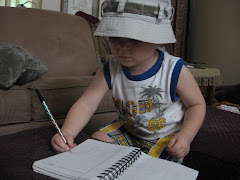
By the way, this is Corbyn on his first day of kindergarten this week. He's quite a bit bigger than when I started writing this blog, as you can see from his picture at the top of the blog. We're reading and writing like crazy together these days!
Subscribe to:
Posts (Atom)